Charles Kynard Where It’s At! (Pacific Jazz 1963)

Charles Kynard’s gospel and blues-drenched first album as a leader didn’t cut a bad figure. 

Personnel

Charles Kynard (organ), Clifford Scott (tenor saxophone), Howard Roberts (guitar),  Ray Crawford (guitar A1), Milt Turner (drums), Leroy Henderson (drums A1)

Recorded

in 1963 at Pacific Jazz Studios, Los Angeles

Released

as Pacific Jazz 72 in 1963

Track listing

Side A: I’ll Fly Away / Amazing Grace / Motherless Child / The Lord Will Make A Way Somehow / I Want To Be Ready / Side B: Smooth Sailing / I Wonder / Blue Greens And Beans / Sports Lament / Where It’s At

I always thought that Elliott, the boy from E.T., and Elliott Smith, the greatest songwriter since Lennon & McCartney, were the only ones that had and extra ‘t’ behind their name. Positively off-beat.

Apparently not. It was Smith’s own choosing, but E.T.’s Elliott Taylor (definitely) and Charles Elliott Kynard (likely) had had no say in the matter.

Kynard, born in St. Louis, Missouri in 1933, may not have been the greatest organist since pioneer Jimmy Smith, but no mistaking was a top-rate B3 burner.

Kynard is known for a feature on Tom Waits’s Blue Valentines in 1978. That was a good ending to a career – he sadly passed away in 1979 – in jazz music which started in the early 1950’s in Kansas City. Apparently – liner notes reveal – Kynard was an excellent Oscar Peterson-styled pianist who switched to organ by fault when a club manager requested he’d play the house organ.

As a teenager, Kynard had regularly snuck in the Metropolitan Baptist Church to play the church organ. In 1957, Kynard already formed organ combos, notably with tenor saxophonist Tex Johnson. By the way, his father Ben Kynard was alto and baritone saxophonist and arranger in Lionel Hampton’s band, not to mention composer of perennial favorite Red Top.

Kynard’s stint on Prestige from 1968-71 sealed his reputation as a groove maestro, a greasy and funky coupling with, among others, Grant Green, Houston Person and Bernard Purdie. Consequently, he recorded a couple of albums for Mainstream.

His debut as a leader in 1963, Where It’s At – recorded shortly after his appearance on Sonny Stitt’s My Mother’s Eyes – doesn’t disappoint. A curious  but soulful effort, dividing sides into gospel and blues. Evidently, soul jazz organ made the bar and club audience in the 1950s and 1960s think about church, that’s part of the reason of why it stuck, and gospel was already in the bones of Wild Bill Davis and Jimmy Smith, so it wasn’t essential to seduce the record buying audience with straightforward gospel music, the message was already sent to it subliminally.

But Kynard likely thought it couldn’t hurt to remind people of their heritage, which of course, should only meet with consent. Actually, he was doing better than Gene Ammons, the biggest soul jazz star besides Jimmy Smith, whose gospel record Preachin’ is a mediocre effort in a string of great and groovy records on Prestige in the 1960’s.

Side A is Kynard’s sermon and he’s attending to the Army of The Lord with two warhorses, Amazing Grace and Motherless Child, while surprising it with lesser-known repertoire, I Want To Be Ready, The Lord Will Make A Way Somehow and, I’ll Fly Away. His band is good, couldn’t been otherwise with saxophonist Clifford Scott, guitarist Howard Roberts and drummer Milt Turner (from the Ray Charles band) in tow, working up a strong gospel beat and a lot of heat. Though it’s I’ll Fly Away featuring guitarist Ray Crawford and drummer Leroy Henderson, plus Ronnell Bright on piano, a roaring ditty, that takes the cake.

Kynard uses side B to sing the blues. Though his sound is still a bit (too) old-fashioned, full register and all, his playing is tasteful, not to mention including superb bass playing, and he contributes swinging solos on Arnett Cobb’s Smooth Sailing and the sprightly blues line Blue Greens And Beans. Clifford Scott, a welcome old-school big-toned addition on any soul jazz record, fires up the hearth of Cecil Gant’s slow blues I Wonder, which also thrives on the saucy licks of guitarist Howard Roberts. Climax Where It’s At is a Jimmy McGriff-style r&b cooker.

Either behind the pulpit or in the juke joint, Kynard proved to be a debutant with plenty Hammond organ chops.

Listen to Where It’s At on YouTube here: https://www.youtube.com/watch?v=g95RuK-_FNU&list=RDg95RuK-_FNU&start_radio=1

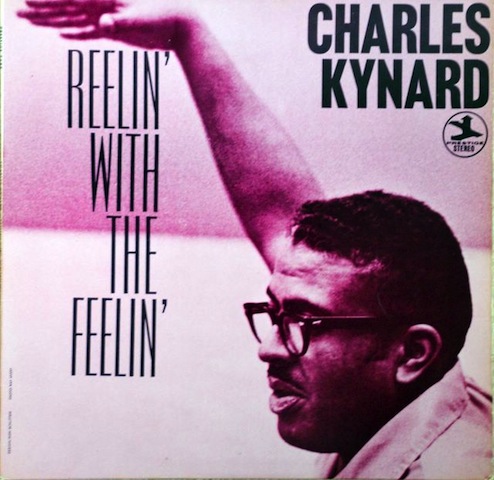
Charles Kynard Reelin’ With The Feelin’ (Prestige 1969)

I first became aware of organist Charles Kynard a long time ago, when listening to a Tom Waits record, Blue Valentines. Greasy, sharp-as-a-knife organ injections were the cherries on top of Romeo Is Bleeding, one of that jazzy, theatrical shuffles that the incomparable growler and storyteller Tom Waits brings with so much zest. Ever quick to scroll through sleeve info, I bumped into the name of Kynard.

Charles Kynard - Reelin' With The Feelin'

Personnel

Charles Kynard (organ), Wilton Felder (tenor saxophone), Joe Pass (guitar), Carol Kaye (electric bass), Paul Humphrey (drums)

Recorded

on August 11, 1969 in Los Angeles, California

Released

as PR 7688 in 1969

Track listing

Side A:
Reelin’ With The Feelin’
Soul Reggae
Slow Burn
Side B:
Boogalooin’
Be My Love
Stomp


My mind went elsewhere, as minds often have the inkling to do. Yet, Kynard had stayed in the back of my mind and when I started digging organ jazz of the likes of Jimmy Smith, Don Patterson and Lonnie Smith, out of the ditch climbed Kynard as well. What I learned is that the fact that Kynard did a Waits date is part of the proof that the organist’s nature was ambidextrous. Kynard is best known for his groovy funk and blues recordings on Prestige and Mainstream. But he also was a regular attributor to Hollywood productions and played gospel in church as well.

Reelin’ With The Feelin’ is Kynard’s third release on Prestige and a fitting example of his blues and soul jazz personality. It has an interesting line-up including guitarist Joe Pass – not often heard in such surroundings – The Jazz Crusaders’ tenorist Wilton Felder and ace studio bassist, Carol Kaye. Re-listening this album only for Kaye’s delicious dry, plucky sound and articulate style, is, as I now know for a fact, a far from weird effort, but on the contrary, very worthwhile.

The three longest cuts of the album – Reelin’ With The Feelin’, Slow Burn and Boogalooin’ – written by arranger Richard Fritz, are fresh funkblues jams. Slow Burn is the highlight. The tight rhythm consisting of tacky drums and a rumbling bass figure so deep it makes you wonder how deep the ocean is in Carol Kaye’s mind, sets things in motion. From then on things are hard to pull to a stop. Kynard builds his solo well, veering from crunchy bass notes to burning rubber-phrases in the upper register. Felder puts in a yearning statement and throws in squeaky and honky twists. Joe Pass produces a mix of funky licks and fast, tricky phrases that travel beyond the confines of the pentatonic blues format. Ever thus, Slow Burn has to come to an end, and it does with a humorous stretch of notes by Kynard.

Predictably, Carol Kaye’s Soul Reggae is a reggae-type tune. It’s a charming ditty that bounces along merrily. Is Kaye the first to incorporate reggae into a jazz format? She might well be. In 1969, reggae wasn’t as yet the big thing it would become when Bob Marley got into the picture. Be My Love is a nice Latin tune. Kynard’s solo is a throat grabber, containing swift, fiery and freewheelin’ phrases, occasional outbursts and repeated r&b attacks. Stomp, written by Wilton Felder, is a variation of Dizzy Gillespie’s Blue ‘n’ Boogie. The drums fail to swing, but the immaculate unisono figures each couple plays behind the given soloist give it the necessary bite. As you may have noticed, Kynard didn’t bring any tunes to this session. You’ll hear, however, that it doesn’t effect the very pleasant and funky proceedings.

Charles Kynard’s date with Tom Waits took place in 1978. He died on July 8, 1979. There’s no such thing as an appropriate passing, but Kynard’s comes close. He died while playing his home organ.